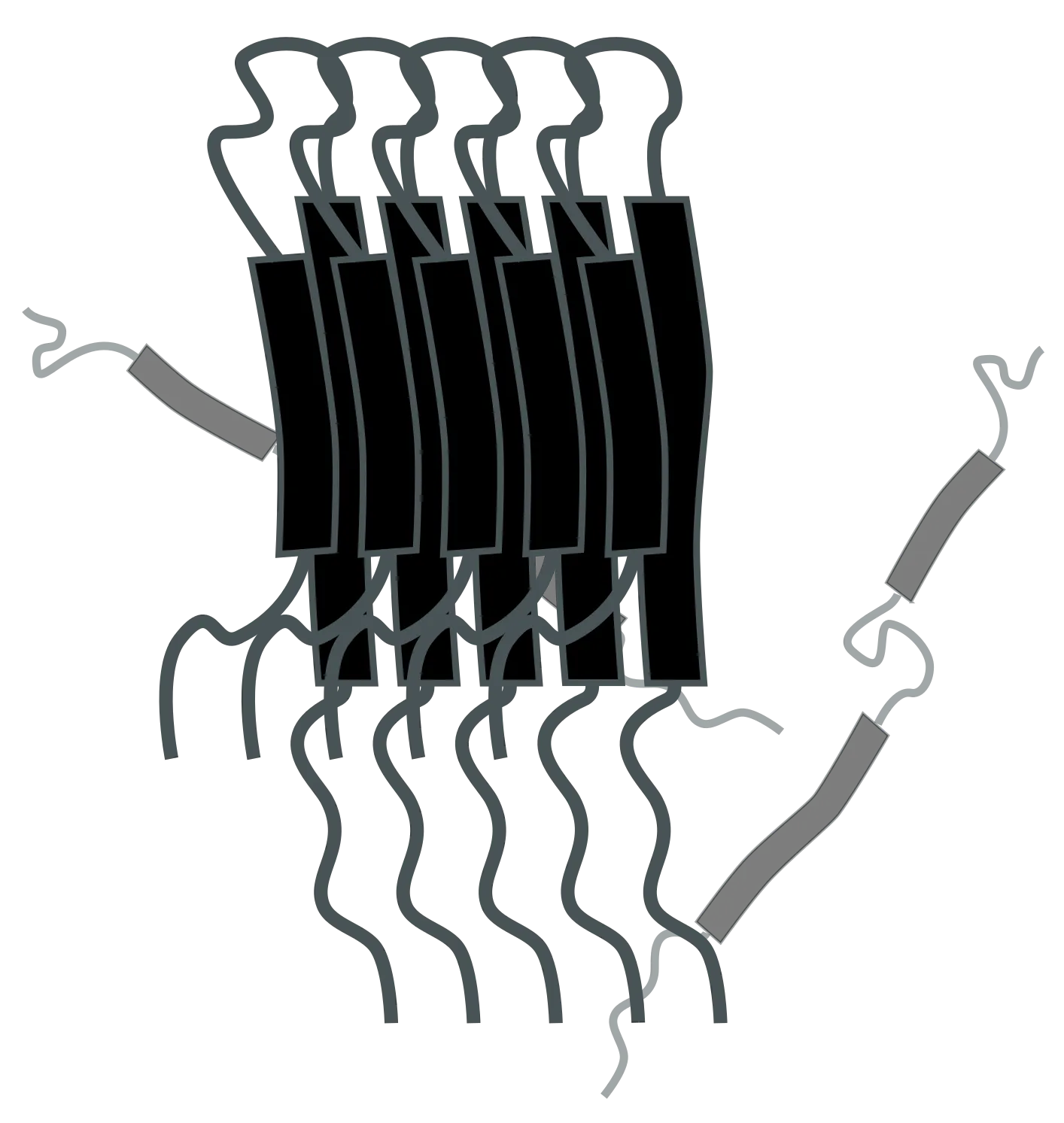
Some proteins have the capacity to bind to themselves in a process called oligomerization. While some proteins are restricted to forming a few, low-order oligomeric complexes, other proteins are able to adopted a wide range of high-order oligomeric structures. Often these high-order complexes exhibit emergent structural and functional properties. Examples of this include intrinsically-disordered proteins and the formation of amyloid fibrils, proteins containing low-complexity regions and the formation of phase-separated droplets, and stress-response proteins and the formation of stress granules among others. This class of proteins participate via oligomerization in a wide range of fundamental biological processes including (but not limited to) cell-death signaling, cellular stress response, and transcriptional regulation. Because of the large size of the resulting oligomeric complexes and the fact they are often heterogeneous in their oligomeric state, these structures are prime candidates for analysis by solid-state NMR.